
US Maize Outlook
- Tuesday October 3, 2006
This analysis featured in the October 3, 2006 issue of the HGCA's MI Prospects, Volume 9, Number 7
Generally favourable weather conditions for the development of the 2006 US maize crop are expected to result in the second largest crop on record, but even this has not prevented a forecast for a sharp decline in US end-season maize stocks.
The US maize crop typically accounts for 30% of world coarse grain production and for over half of world trade in coarse grains. It dominates the international feed grain markets in a manner that not other national crop comes close to matching.
The US maize crop is produced in a relatively small geographic area, with more than 75% in Iowa and Illinois and those five states contiguous to them. This area is distant from the moderating influence of any ocean, and as the growth of the crop is very rapid and mainly limited to June, July and August, the outcome of the crop is dependent on very favourable conditions during this period.
This year's weather in the major corn belt states was favourable and the USDA September estimate of production is for an average yield of 9.71 t / ha, the second largest yield on record. The higher yields were the result of recovery in the central states of Illinois and Missouri which suffered dry condition last summer and poorer yields in some states peripheral to the main corn belt which were dry this year and also incidentally suffered from poor wheat crops (Table 1). Yields were generally lower than in 2004, when growing conditions seemed ideal almost everywhere.
continue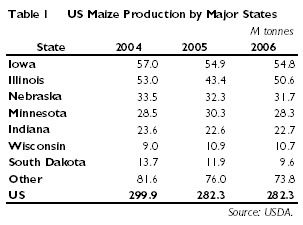 continued
The September forecast production of 282Mt would also, by a small margin, be the second largest harvest on record despite a below area harvested area. But even with a crop of this size the USDA is projecting a 39% decline in end-season stocks to 31.0Mt, 8.1% of supplies. The big difference between last years' supply and demand data is a 5.5Mt increase in the use of maize for the production of fuel ethanol. On a percentage basis the increase of 34% is up from 21% last year.
Although harvest weather is not critical for the crop, the wet weather which favoured crop development earlier is, of course, holding up harvest. The cobs tend to be well protected from rain by the husk and lower temperatures particularly at night discourage spoilage. Farmers in the more northern states often find themselves waiting for the ground to freeze sufficiently to bear the weight of the combine.
In the past the potential of the US to produce maize in excess of all reasonable expectations of demand was never in doubt. Recent growth in demand, particularly for the production of fuel ethanol, has meant that record or near record yields have been necessary for US domestic and past export markets to be supplied. Given that US end-season stocks last year and this year have been drawn down, even though the two crops were the second and third largest on record, attests to the reality that without record or near record yields, and the necessary favourable weather for this, the US may not in the future be in a position to service its traditional export markets.
David Walker 001 780 434 7615
top of page